Essayism Review: Towards a Definition
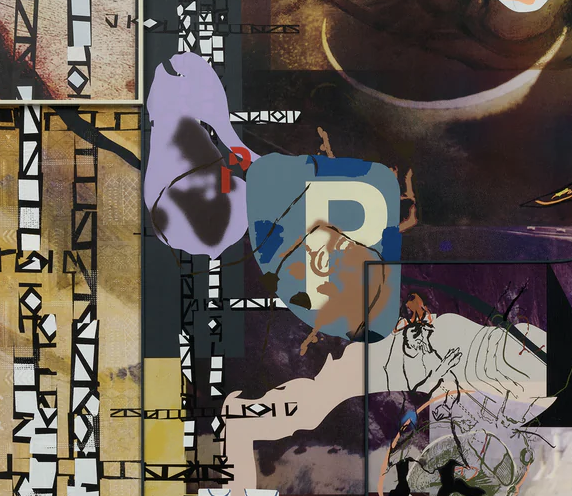
Brian Dillon, Essayism, London: Fitzcarraldo Editions, 2017
I’ll start with the conclusion so there’s no chance of wandering off and reaching a different one: the book led me to understand “essayism” to be an attitude toward writing. From the outside, this attitude appears as an attraction to, or enthusiasm for essays, without implying any preference over other kinds of writing, say, fiction, on the one end of the spectrum, and the authoritative, accurate, account, the inherited ideal of academic writing, the treatise? on the other.
Dillon begins with quite an elaborate list of essay topics that come to his mind, apparently immediately available to him as titles on or near his desk. It’s so diverse as to seem infinite. It casts a wide net among us readers, I think. Not only will we recognise our own relationships to lists (it’s a feature of literate thinking), but we’re likely to ask ourselves how our list would differ from his — if we were writing such as essay about essays. Essayism is personal, then. Still, someone who exhibits signs of it is not automatically an “essayist,” that is, a writer of essays. Or is she?
I’m very glad Brian Dillon wrote this and that Fitzcarraldo published it. I feel lucky to have found it. It’s launched many small, branching inquiries, including one about how any given reader “meets” a given book. It can seem like one particle steering through fields of tiny magnetic charges, infinitely various attractions competing for attention. For me, at least, it’s not magic, or fate. It’s not random, either, although I wonder whether we can really know. Perhaps some readers resolve the issue systematically, searching as part of a master plan for optimum mind-feeding. But wouldn’t that have to be qualified, as in, “usually, I decide according to a plan but…”? Could any of us categorically reject chance, or some less-than-logical attraction as possible factors, on occasion?
Who wants to read an essay about essay? It’s a reader, of course, and one with a particular kind of curiosity and reading experience. I do. I like essays. Among writers I admire, I often prefer essays to fiction. I find them more accessible, more direct, probably more likely to spark off questions that hadn’t occurred to me before. I want to trust a writer to explore an open topic openly: no guide rails, no assurances (although in this case, I felt I could also trust the publisher, Fitzcarraldo, on the basis of the values that seem to have guided its past choices, the evidence of courage — which is to say, willingness to take a risk.) And Dillon earned the credit I extended, confirming and expanding old enthusiasms, opening new ones, keeping me guessing, making me wonder whether essayism isn’t a name for a personal, physical attachment to writing, something essential to one’s own cognitive processes. Maybe wanting to read an essay about essays makes you a reader who reads about writing, who may begin to write without knowing how it will end, who may be, in other words, an essayist.